Accessibility Statement
    spoonflower-logo
    August 9, 2025 • Updated December 30, 2025

    How to Sew a Dog Coat

    *Cold weather friends rejoice—it’s fleece season! As you pull out your favorite cold weather pullovers, your furry friend may be wondering, “Where’s mine?” With this Polartec® Fleece dog coat tutorial from Spoonflower maker Stacie Rudy of Rudy Adventures, you can add a stylish and cozy item to their wardrobe so they’re ready for outdoor adventure too. Fleece dog jackets are as snuggly as they are cute. Plus this one comes with an optional hood to keep them extra warm!
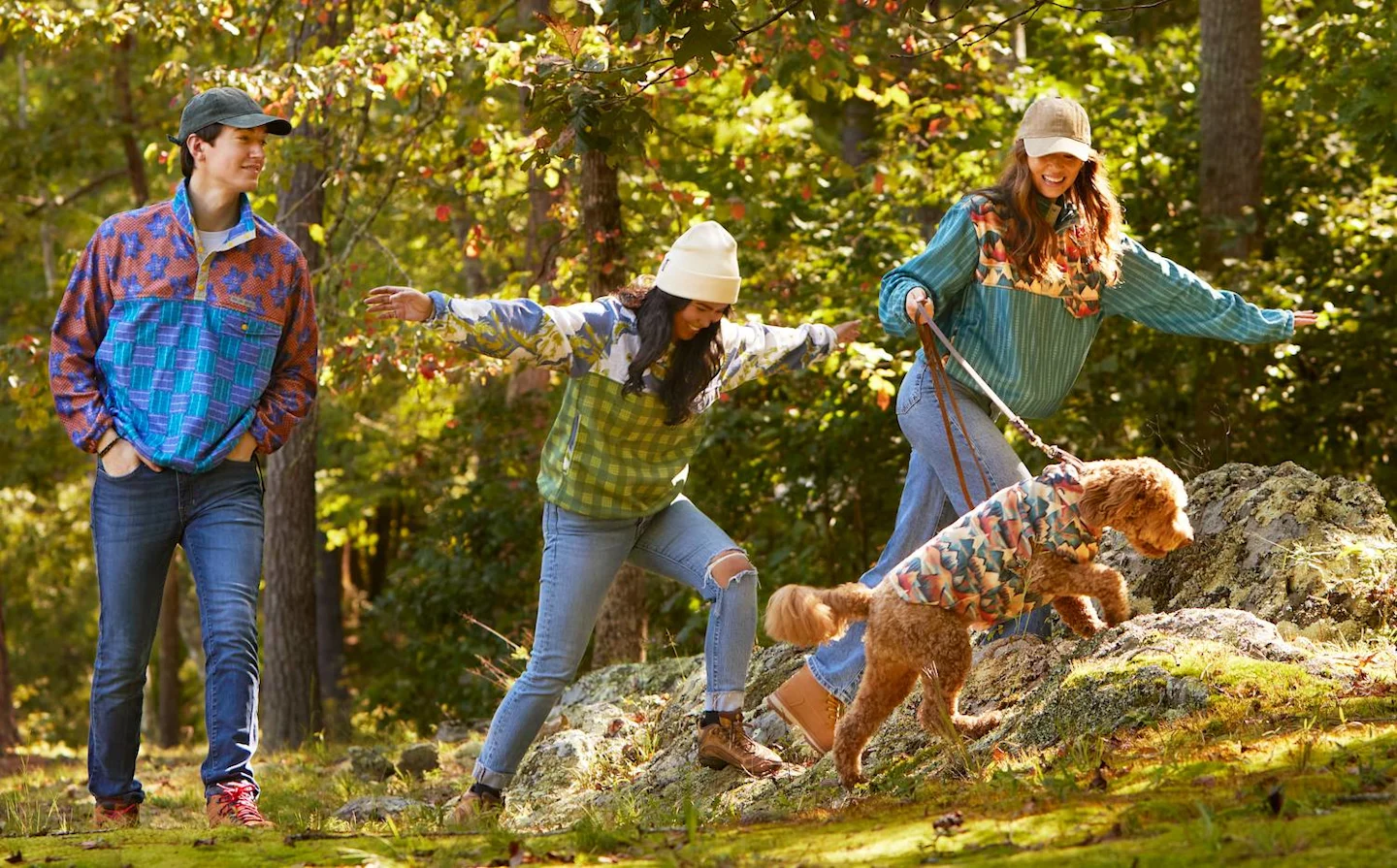
    Three people are walking in the woods. The person at left is walking through the grass, the two people on the left are walking over large rocks along with a goldendoodle. The people are wearing jeans and quarter-button fleece pullovers in bright designs.
    Is there anything cuter than a dog dressed for the occasion? Learn how to sew a coat for your dog with our step-by-step tutorial and free pattern! Skill Level: Beginner

    See What Size Coat is Right for Your Pup

    See the size chart to see what size coat to make your pet. Since you are using stretchy fabric, sizing is based on the weight of the dog vs. pup measurements.
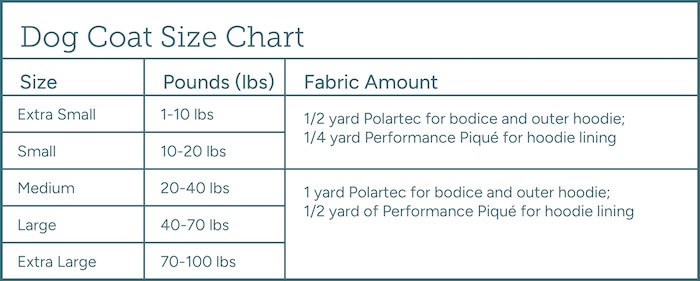
    A dog coat size chart to use as a reference for making this project. The chart says extra small 1-10 lbs, small 10-20 lbs, medium 20-40 lbs, large 40-70 lbs and extra large 70-100 lbs. Another column shares the fabric amount needed for each size: 1/2 yard
    • 1-10 lbs: Extra Small Dog Coat PDF Printable Pattern • 10-20 lbs: Small Dog Coat PDF Printable Pattern • 20-40 lbs: Medium Dog Coat PDF Printable Pattern • 40-70 lbs: Large Dog Coat PDF Printable Pattern • 70-100 lbs: Extra Large Dog Coat PDF Printable Pattern

    Dog Coat Supplies

    Want to Skip the Hood or the Hood Lining?

    If you’re looking for how to make a dog coat without a hood, just follow the instructions for the bodice pieces of this tutorial and you’ll have a cute hood-less coat! If you’d like to sew a hood but would rather skip the lining, that works too.

    Steps to Sew a Dog Coat

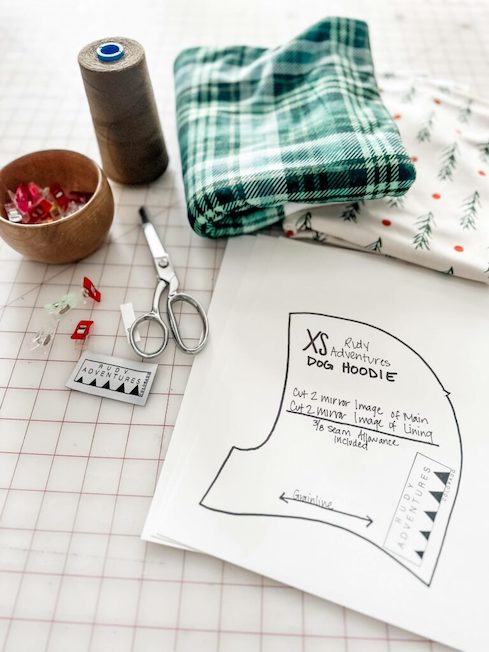
    Cut-out pieces of square paper rest on a grid surface near a pair of scissors, a spool of thread and sewing pins. A folded piece of green, black and white plaid fabric lays on a white piece of fabric with red dots and evergreen tree leaves.

    Step 1. Print Your Pattern and Cut Out Your Pieces

    Print your free Rudy Adventures Pattern, making sure it’s scaled at 100%. Cut out the eight pieces of the pattern, which you’ll be using as paper templates to create the dog coat. Given that Polartec® Fleece doesn’t fray, please note that the arm and body openings will have raw edges vs. finished ones.
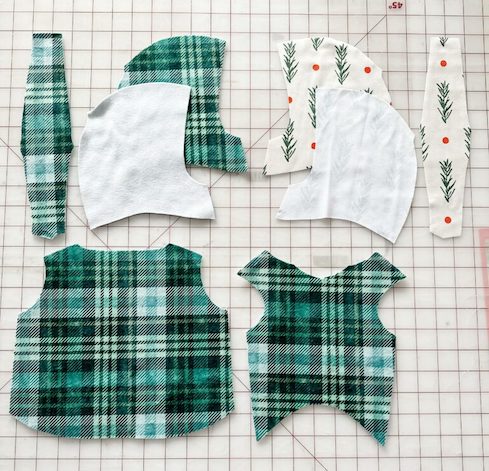
    Plaid green hoodie and bodice fabric pieces lay to the lefthand side on a white cutting mat with a red grid. Fabric pieces for the hoodie in a design with a white background and red dots and evergreen leaves lay to the righthand side of the cutting mat.

    Step 2. Trace Your Pattern Pieces onto Fabric and Cut Them Out

    Once you’ve cut out your hoodie and bodice paper pattern pieces, lay them on top of your fabric. You should have eight paper pattern pieces, two of which will be placed on the fabric’s fold as noted below: 2 Bodice Pieces: • 1 front bodice piece (cut this pattern piece with the fabric folded in half) • 1 back bodice piece (cut this pattern piece with the fabric folded in half) 6 Hood Pieces (3 outer hoodie pieces, 3 lining pieces): • Outer Hoodie – Using Polartec® Fleece • 2 main side pieces (one for each side of the hood) • 1 main center piece (for the center section of the hood) Hoodie Lining – Using Sport Piqué • 2 lining side pieces (one for each side of the hood) • 1 lining center piece (for the center section of the hood) Using your fabric chalk or marker, trace your pattern pieces onto your fabric. Before cutting both front and back fabric pieces, mark the center of the neckline on both pieces. Once you’ve traced your paper templates onto your fabric, cut your pattern pieces out of your fabric. Now let’s start sewing!

    Step 3. Sew the Bodice Shoulders Together
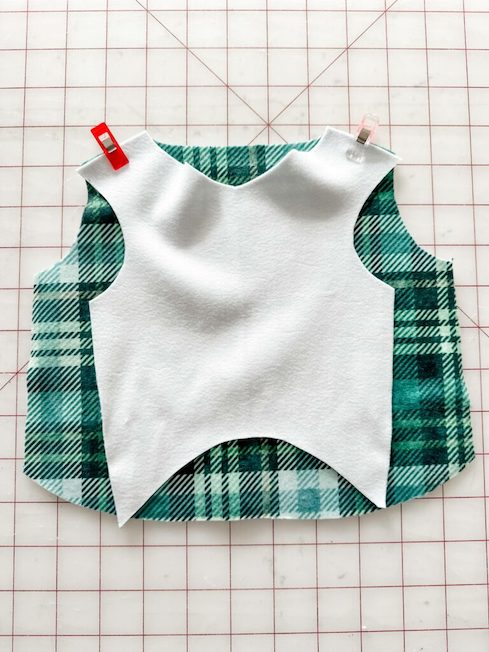
    The wrong side of a green-and-white plaid fabric piece lays on top of another green-and-white fabric piece that is design side up. They are held together using sewing clips. The fabric lays on a white cutting mat with a red grid.
    Pin or clip the front and back bodice pieces together with the right sides facing inward. Using a 3/8” (1 cm) seam allowance, sew the front and back bodice pieces together at the shoulders. If you’re using a sewing machine, start and finish with a zigzag stitch, as with all sewn parts of this project. If you’re using a serger, check out this post with ways to finish your serger chain.

    Step 4. Sew the Bodice Sides Together

    The front bodice piece lays design-side down on top of the back bodice piece, which is laying design side up. Two sewing clips hold the left and right sides of the fabric together. Two sewing clips have been placed at the top of the bodice pieces as well.
    The front bodice piece is laying design side down on top of the back bodice piece, which is design side up. One sewing clip is in the top center of each piece of fabric. Stitches on the shoulders and sides of the bodice indicate what it should look like a
    Next, sew the sides of the bodice. With the right sides facing inward, clip the side bodice sides together and sew the side seams. Start and finish with a backstitch, then turn the fabric pieces right side out. Set that aside, and let’s start working on the hood.

    Step 5. Sew Your Hood Pieces Together

    A side piece of the hood is design side up and is clipped to the center piece using sewing clips. The hood’s center piece is design side down. The fabric lays on a white cutting mat with a red grid. The design on the fabric is a green-and-white plaid.
    A green-and-white plaid hood is in the process of being sewn. Half of the hoodie is shown design side up and has been sewn to the center piece of the hoodie, which is design side down.
    Organize your 6 hood pieces. To keep things neat, place your 2 main side hood pieces (one for each side) and 1 main center hood piece (for the center section) together in one small stack. Then do the same thing for your 2 lining side pieces and 1 lining center piece. Next, you’ll be sewing the edges of the hood’s center pieces to each hood side piece individually. First sewing one long edge of the hood center piece to one hood side piece, then the other. Starting at the top, clip the hood center piece to the top of one hood side piece. Clip these pieces together all the way down the curve of the bottom of the hood. Be sure to line up your center notches. Sew in place and repeat this step for the other side of the hood.
    One of the hoodie’s side pieces is shown design side down and sewn to the curve of the center piece. Two sewing clips are at the hoodie’s small front center piece holding the two side pieces together. The fabric lays on a white cutting mat with a red grid
    One of the hoodie’s side pieces is shown design side down and sewn to the curve of the center piece. The edges where the sewing clips were are now sewn together.
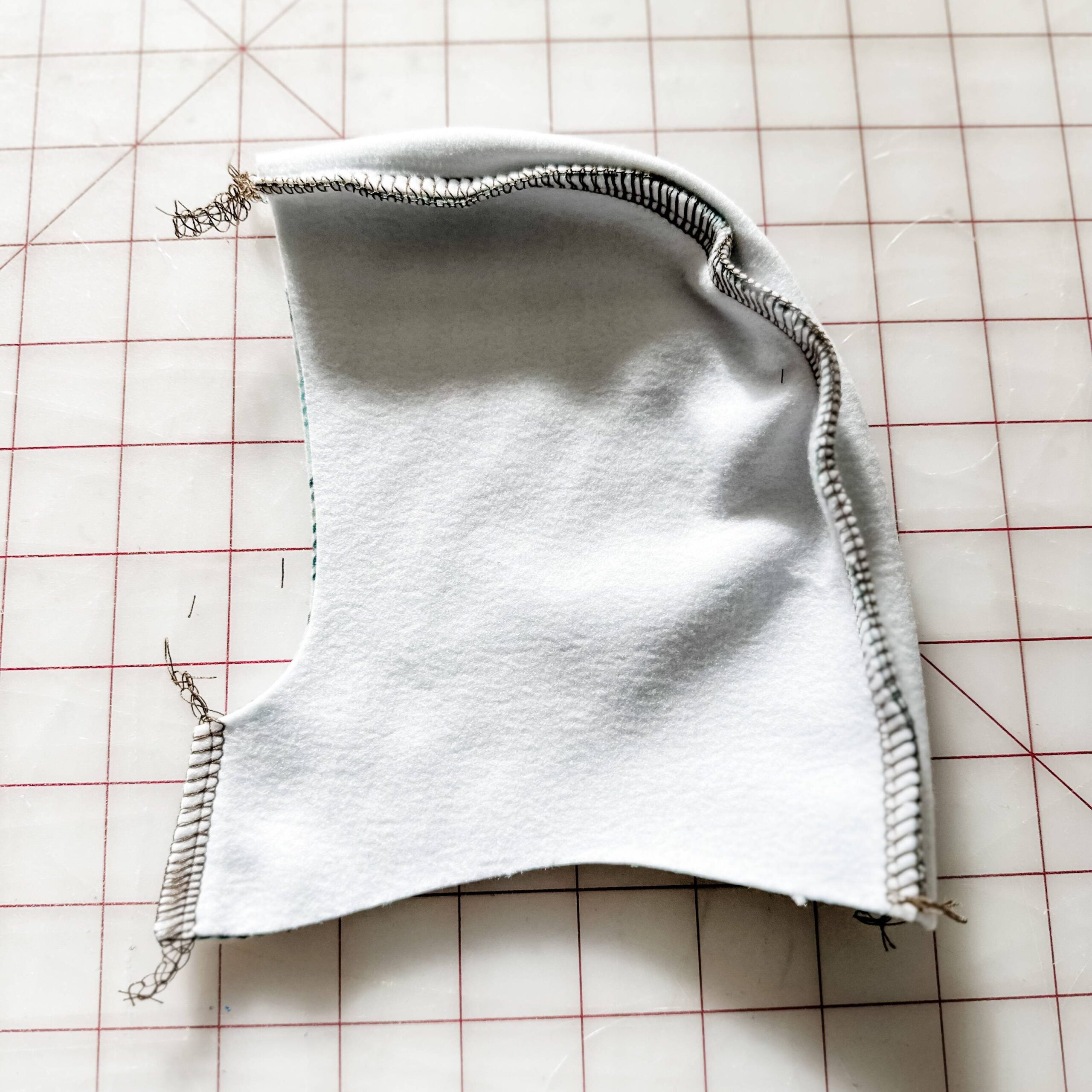
    After both hood side pieces have been sewn to the hood’s center piece, sew the short front bottom of the hoodie (where the dog’s neck would be) into place and sew. Repeat all of Step 5 above for the hood lining.

    Step 6. Create the Hood

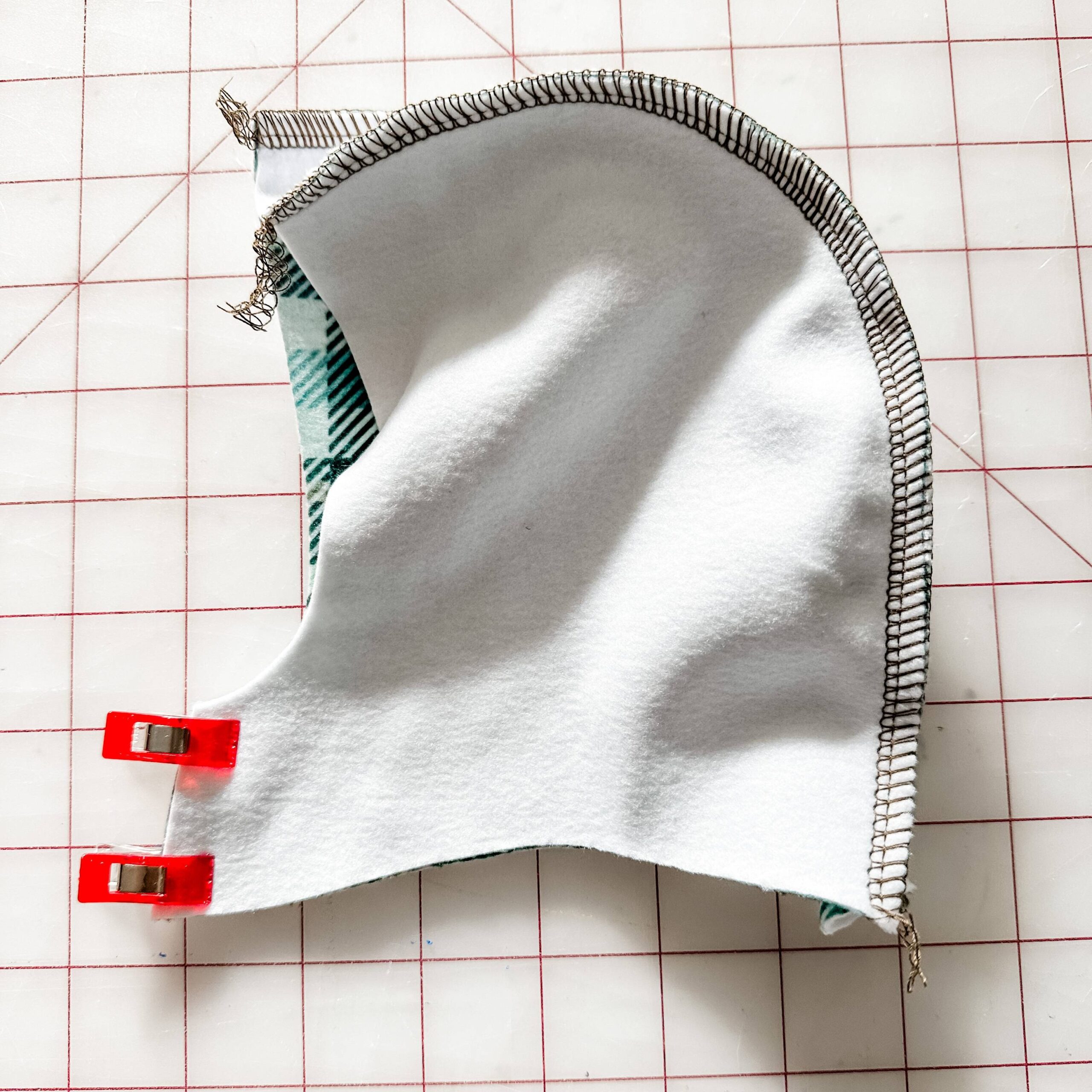
    Now comes the fun part—starting to see it all come together! Prepare both hood sections to be sewn together by laying your main hood wrong side out, and your lining hood right side out. Placing them with the right sides together looks like the images below:
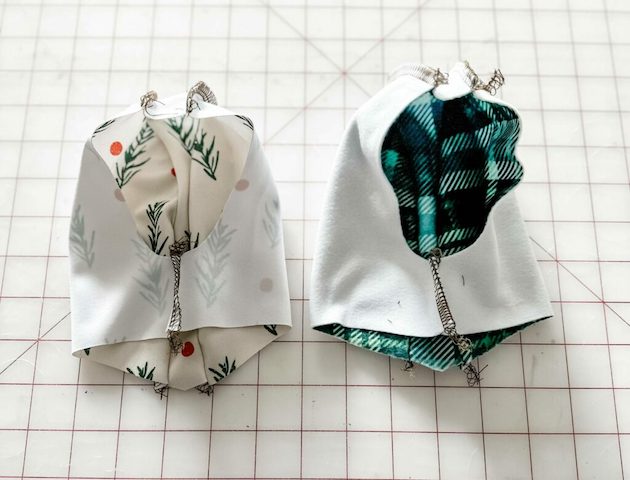
    Two parts of the dog coat’s hoodie, the exterior and the interior lining, lay on a grid surface with the fabric’s wrong side facing out. The fabric lays on a white cutting mat with a red grid.
    Clip around the face, match all seams and sew in place around the face only. Do not stitch around the bottom.
    The exterior hoodie piece is turned design side in while the interior hoodie piece is turned design side out. The exterior hoodie piece is placed inside the interior hoodie piece. Sewing clips secure the two pieces at the center top and bottom where the d
    The exterior hoodie piece is turned design side in while the interior hoodie piece is turned design side out, so that the right sides of the fabric are facing each other. The exterior hoodie piece is placed inside the interior hoodie piece. Stitches repla
    Next, turn your hood right side out to see it come to life.
    The hoodie is flipped so the exterior, green plaid design is facing up. From the inside the interior, white green and red design is also visible. A sewing clip secures the bottom center of the hoodie where the bodice will soon be connected. A grid surface

    Step 7. Sew the Hood to the Bodice

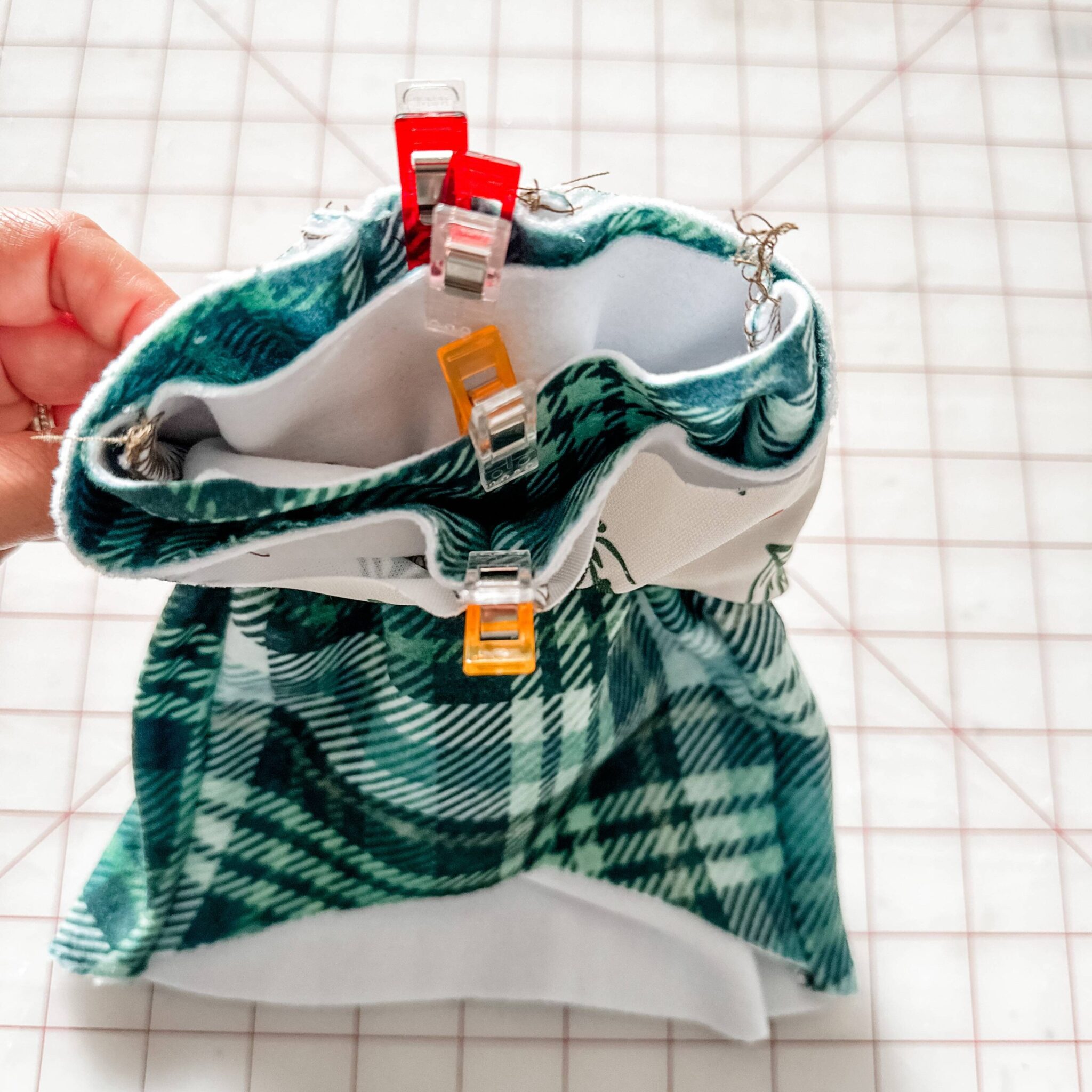
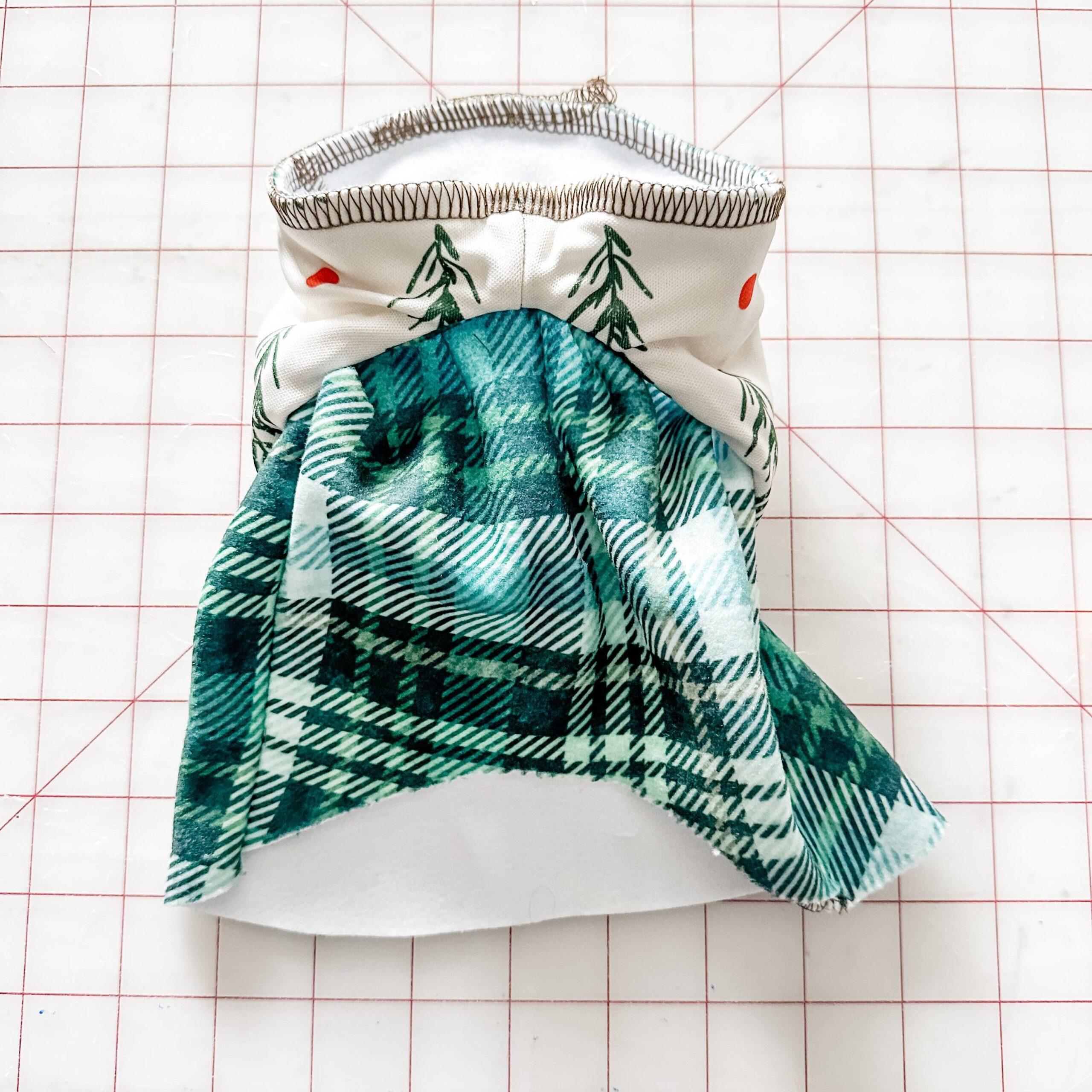
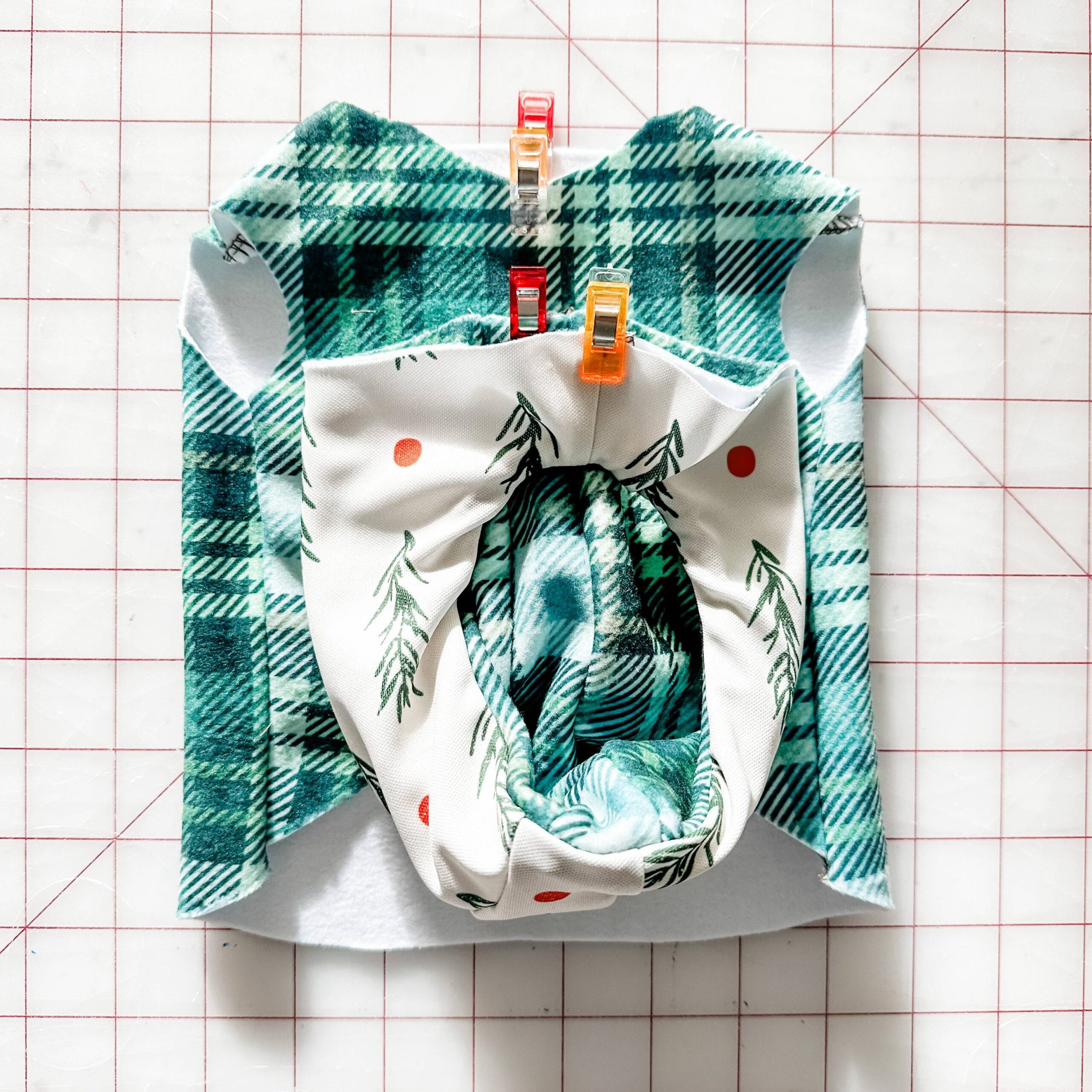
    The final step is to sew the hood to the bodice. Turn your hood so that the lining is facing outward and your main fabric is on the inside. With the hood upside down and the face opening up, pull the coat bodice up through the face opening and into the open bottom of the hood. (See the image below.) Your goal here is to align the bottom raw edges of the hood with the bodice neckline.
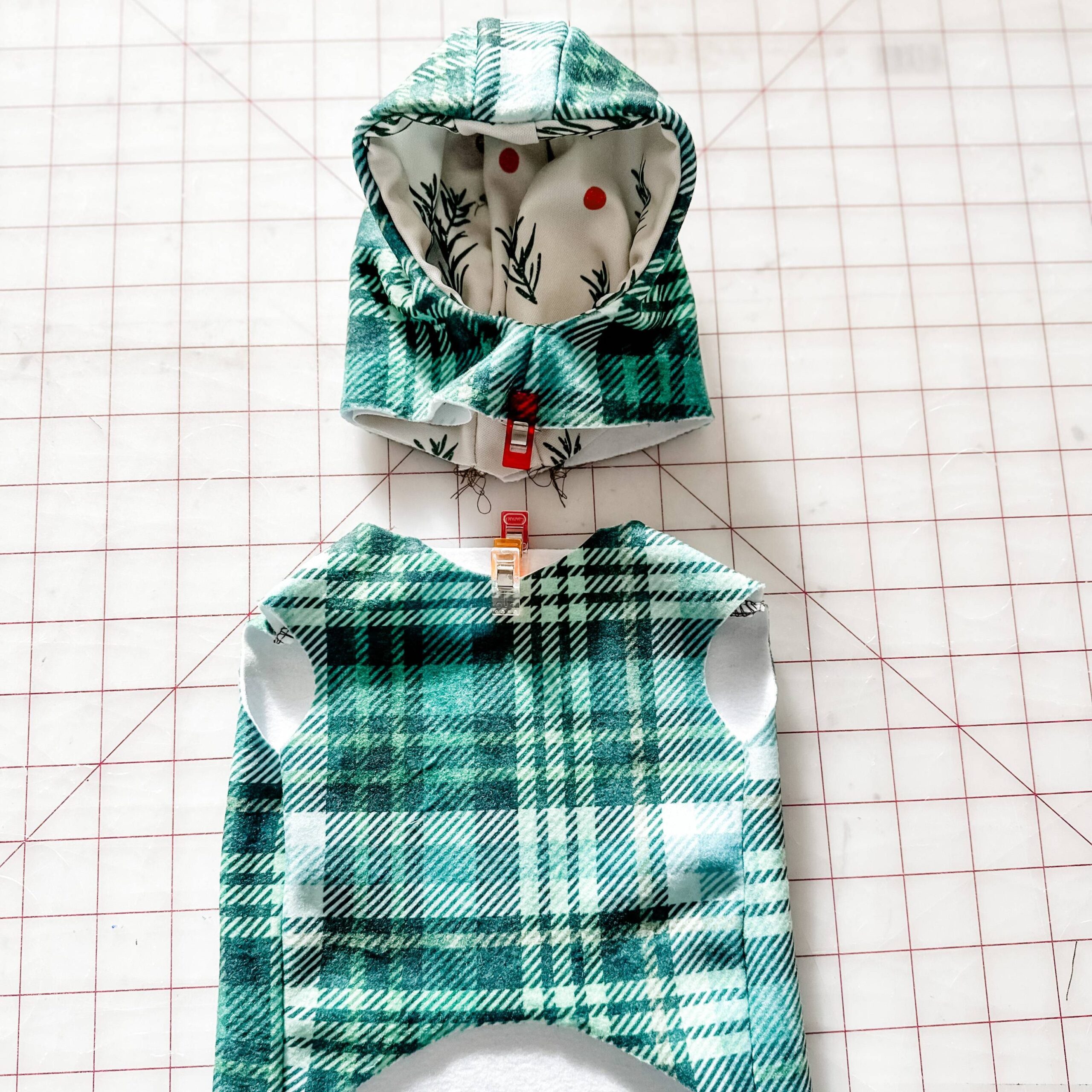
    A Plaid green hoodie with green, white and red interior has sewing clip securing the bottom of the hood piece. A sewing clip is clipped to the center of the Green plaid bodice below the hoodie. The clips are lined up vertically. A grid surface is in the b
    A green-and-white plaid hood is flipped inside out and rests on top of a green-and-white plaid bodice. The fabric lays on a white cutting mat with a red grid.
    Clip the raw edge of the hood’s bottom to the bodice neckline, clipping first at the center front and the center back. Clip all the way around, then sew in place.
    Stacie holds up the bodice and hoodie. The bodice has been pulled through the bottom of the hoodie piece. The sewing clips secure the bodice and hoodie from the center as we prepare to sew them together.
    The hoodie and bodice are now sewn together and lay on a grid surface. The interior of the hoodie faces up, showing stitches that replace the sewing clips.
    Now that they’re sewn together, flip your hood right side out! For more personalization, add a label (or name tag) to the coat to show who made it.
    A plaid green-and-white dog jacket is on a white cutting mat with a red grid with the front of the hood facing up. The inside of the hood is white with red dots and evergreen leaves.
    A plaid green-and-white dog coat is on a white cutting mat with a red grid with the back of the hood facing up. The inside of the hood is white with red dots and evergreen leaves. A small “Rudy Adventures” label is in the bottom center.

    Step 8. Dress Your Pup For Winter!

    To put the coat on your dog, slide it on first over the head, then through each paw individually. To remove the coat, take out each paw one at a time, then slide it off your pup’s head. Enjoy!
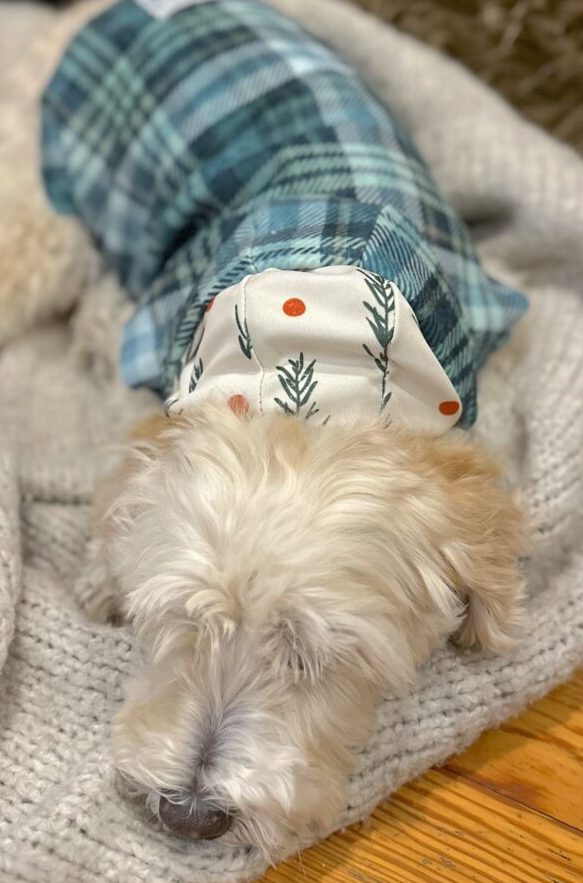
    A small white dog wears a green plaid dog jacket and is snuggled on a grey blanket in front of a fireplace. The image shows the jacket from above.
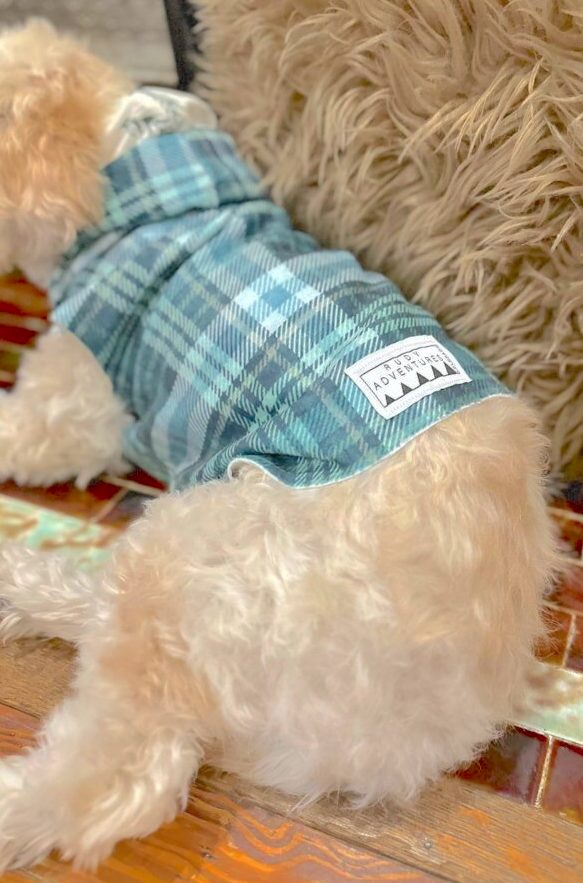
    A small white dog wears a green plaid dog jacket and is snuggled on a grey blanket in front of a fireplace. The dog is facing away from the camera with its back shown.
    SEE MORE POLARTEC DESIGNS

    Frequently Asked Questions

    What size dog will fit in a dog jacket created from this tutorial?

    The PDF sizes range from XS-XL for dogs weighing 1-100 pounds.

    Why use Polartec Fleece to make a dog coat?

    Polartec Fleece is ideal for cold-weather apparel like a dog coat. It’s a durable, lightweight and breathable substrate. The fabric is stretchy and soft, and does not generate pills with washing.

    How do I care for my Polartec Fleece dog jacket?

    Just like your favorite fleece pullover, when this coat needs to be cleaned, wash it on a warm or cool water setting, and dry it on low heat.
    WHY SPOONFLOWER?

    Made to order using unique designs from artists worldwide.